
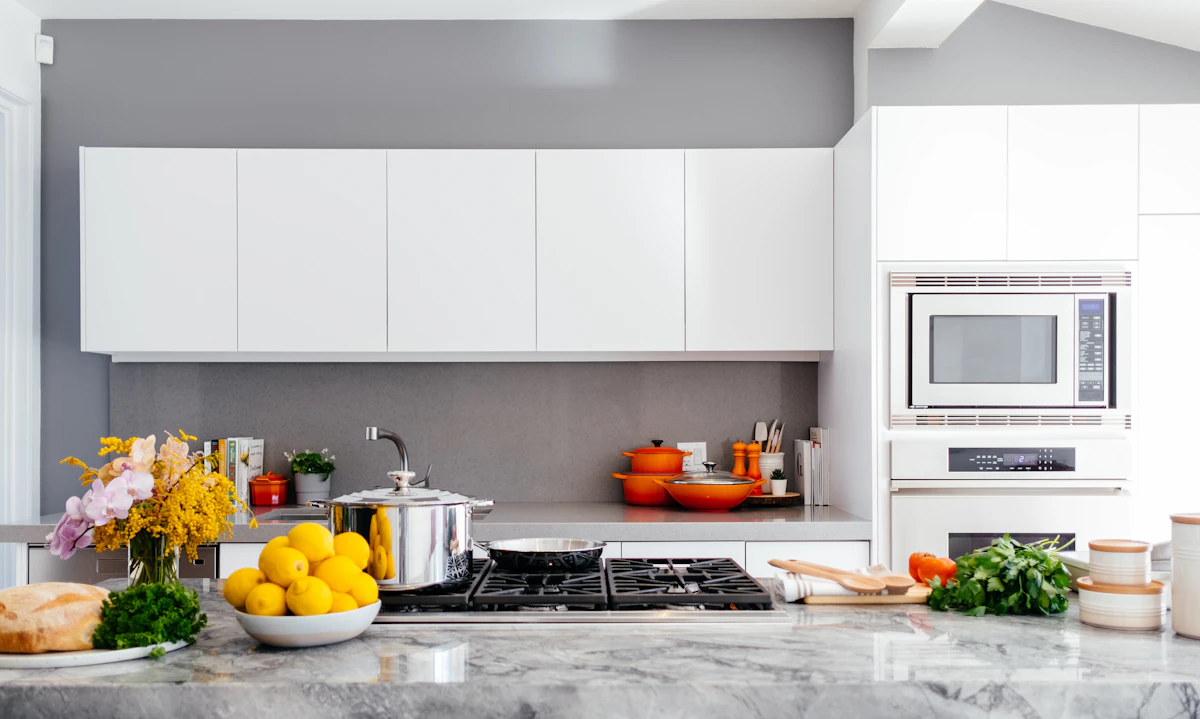
21 Budget Small Kitchen Organization Ideas for Renters
Budget small kitchen organization for renters starts with one idea: fix the daily annoyances first, with cheap, removable pieces you can take with you when you move. Most of the frustration in a rental kitchen comes from the same few problems — crowded counters, deep cabinets where things disappear, and drawers that turn into a jumble every time you cook. The good news is that most fixes cost between $5 and $60, need no drilling and no permanent changes, and use simple pieces from IKEA, Target, Amazon, and Walmart. Below are twenty-one ideas for the whole kitchen — counters, drawers, cabinets, and the fridge — so you can start with one corner and build from there. These small apartment storage ideas use the same renter-friendly approach in every other room of your home.
Small Kitchen Organization: How Do I Clear the Counters and Use Cabinet Space Better?
Start by keeping only the items you use every single day on the counter, such as the coffee maker and a cutting board, and give everything else a home inside a cabinet or on a shelf. Counters are prime real estate in a small kitchen, so a clear stretch of counter is worth more than any organizer you can buy. The seven ideas below cover the counter, the corner cabinet, the space under the sink, and the side of a cabinet.
1. Keep Only Daily Items on the Counter
Take everything off the counter, then put back only what you use every day, like the coffee maker, a cutting board, and a knife block. Store the blender, food processor, and other occasional tools in a cabinet, so cooking and cleaning feel faster.
2. Add a Small Tiered Shelf Riser
A two-tier shelf riser, usually $15 to $25 at Target or Amazon, instantly doubles the usable space on a counter or inside a cabinet. Use it for mugs, spices, or small bowls, keeping the most-used items on the bottom and the extras up top. It also stops stacks from toppling every time you reach for one cup.
3. Put a Lazy Susan in a Corner Cabinet
Corner cabinets are where sauces and oils go to hide, so add a turntable for about $12 to $20. A quick spin brings the soy sauce or olive oil to the front, with no digging and no knocked-over bottles. Choose a non-slip base so jars stay put when you turn it.
4. Hang a Tension Rod Under the Sink
A tension rod, about $8 to $12, fits across the cabinet under the sink with no screws and no damage to your rental. Hang spray bottles from it by their triggers, freeing the floor of the cabinet for sponges, dish soap, and trash bags. It takes five minutes to install and comes down just as fast.
5. Use the Side of a Cabinet for Hooks
The side of a cabinet or fridge is often wasted space, but removable adhesive hooks, about $6 for a pack, can hold measuring cups, aprons, or oven mitts. Keep the hooks near your prep area so tools are within reach while you cook. Remove them cleanly when you move out.
6. Switch to a Countertop Knife Block or Adhesive Magnetic Strip
Knives loose in a drawer are unsafe and dull quickly, so give them a dedicated home for $20 to $35. A compact countertop block works in any rental, while an adhesive-backed magnetic strip keeps knives visible and off the counter. Either option frees a whole drawer for other tools.
7. Roll In a Slim Kitchen Cart
A slim rolling cart, usually $35 to $60 from IKEA or Walmart, adds a work surface and storage that you can move where you need it. Use the top for prep, the middle shelf for mixing bowls, and the bottom for pantry overflow.
How Do I Make Drawers, Doors, and Vertical Space Work Harder?
Kitchens run out of horizontal space first, so look to drawers, doors, and the walls you already have. Drawer dividers turn one messy drawer into neat lanes, hooks on the inside of a cabinet door hold lids and cloths out of sight, and a vertical holder keeps baking sheets and lids standing on edge instead of stacked flat.
Measure each drawer and cabinet before you buy, because a perfect organizer in the wrong size is just clutter.
8. Divide Every Drawer With Inserts
Drawer dividers or a bamboo insert, about $15 to $25, turn one messy drawer into neat lanes for forks, knives, and serving spoons. Measure your drawer first, then choose an expandable insert so it fits snugly without sliding around.
9. Stack Bins Inside Deep Cabinets
Deep cabinets waste the space above short items, so add stackable bins or small crates for $10 to $18 each. Put baking supplies in one bin, snacks in another, and pull the whole bin out like a drawer. Label the front so everyone in the household puts things back in the right place.
10. Hang a Rack Inside a Cabinet Door
The inside of a cabinet door can hold a small rack for lids, foil, or cleaning cloths, using adhesive strips instead of screws. A rack costs about $10 to $15 and keeps flat items upright and easy to grab. Check the door still closes fully before you load it up.
11. Add Shelf Risers Inside Cabinets
The same risers that help on counters work inside cabinets, too, especially for plates and bowls. A $12 to $18 riser creates a second level, so you can store everyday plates below and serving dishes above.
12. Use a Pull-Out Caddy Under the Sink
A small pull-out caddy or sliding basket, about $18 to $30, makes the awkward space under the sink much easier to use. Slide it out to reach dish soap and sponges, then slide it back without knocking bottles over. Leave space around the pipes and choose a caddy that fits your cabinet width.
13. Store Lids and Baking Sheets Vertically
Lids and baking sheets take up far less room standing on edge than stacked flat. A vertical file holder or lid organizer, about $10 to $15, keeps them upright in a cabinet or on a shelf. Sort them by size so you can pull one out without the whole stack sliding.
14. Add an Over-Sink Dish Rack
An over-sink rack, usually $20 to $35, uses the space above the sink to dry dishes without taking up counter space. Choose a roll-up rack that can be stored flat, or a fixed rack sized to your sink.
How Do I Organize the Pantry, Fridge, and Everyday Extras?
The last group of ideas tackles the fridge and the everyday extras, where small, clear systems stop food and supplies from getting lost. For the pantry itself, the dedicated guide to small pantry organization ideas for apartments goes step by step through zones, bins, and labels for the pantry closet alone.
The ideas below cover the fridge, spices, mugs, and the sink area, plus two simple pantry helpers that work in any cabinet.
15. Use Clear Bins in the Pantry
Clear bins, about $8 to $15 for a set, make it easy to see pasta, rice, and snacks without opening every container. Group similar foods together, one bin for breakfast, one for baking, and one for snacks, and label each bin. Clear bins also stop small packets from sliding to the back of the shelf.
16. Add a Can Riser or Step Shelf
Canned goods are hard to see when they sit in rows, so a stepped can riser, about $12 to $18, lifts the back cans up. You can spot the beans or tomatoes you need without moving five cans out of the way.
17. Organize Spices With a Tiered Step or Fridge Magnets
Spices get lost fast, so give them one clear home. A small tiered step inside a cabinet costs about $10 to $15, while magnetic spice tins on the side of the fridge cost about $15 to $20 and use no shelf space at all.
18. Add Bins and Labels to the Fridge
Fridge bins, about $10 to $20 for a set, stop leftovers and produce from drifting to the back and being forgotten. Use one bin for breakfast foods, one for leftovers, and one for sauces, and add a simple label to each.
19. Hang Mugs Under a Shelf
Under-shelf mug hooks, about $8 to $12, screw or clip beneath a cabinet shelf and free up a whole shelf for plates or food. Hang four to six mugs where they are easy to reach each morning.
20. Keep a Sink Caddy and a Soap Dispenser Tidy
A small sink caddy, about $8 to $12, holds the sponge, brush, and dish soap in one neat spot instead of scattered around the sink. Refill a matching soap dispenser instead of keeping a bulky bottle on the counter.
21. Do a Five-Minute Reset Every Night
No organizer works if things never go back where they belong, so build in a short nightly reset. Put dishes away, wipe the counters, and return tools to their bins and hooks, all in about five minutes.
Budget Small Kitchen Organization for Renters: How Do I Make It Stick?
Start with one problem area, not the whole kitchen at once, and spend $25 to $50 on that first fix. Measure cabinets, drawers, and shelves before you buy anything, and keep receipts and packaging for a week in case a piece does not fit. Take your organizers with you when you move, since most of these ideas are designed to travel from one rental to the next. To see what these ideas look like in one real room, this small kitchen makeover before and after on a $200 budget shows every change, its cost, and what it felt like to live with afterward.
Frequently Asked Questions
How do I organize a small rental kitchen without drilling?
Use tension rods, removable adhesive hooks and strips, over-door racks, shelf risers, and freestanding carts and bins. These options need no screws or holes, come down cleanly when you move, and still add a lot of storage. Always check your lease and use adhesive products made for the surface you are sticking them to.
What should I organize first in a small kitchen?
Good small kitchen organization starts with the spot that slows you down most, usually the counter, the drawer full of utensils, or the cabinet under the sink. Fixing one daily annoyance gives you a quick win and shows you what kind of storage you actually need. Then move on to the pantry and fridge.
How much should I budget for kitchen organization?
Most renters can make a real difference for $50 to $100, spread over a few weeks. Begin with low-cost pieces like hooks, bins, and a tension rod, then add a cart or a larger organizer only if you still need it. Buy for your real habits, not for a perfect-looking kitchen.
What is the cheapest way to organize a small kitchen?
Start with the free and nearly free fixes: clear the counter, group like items together, and move rarely used tools into a cabinet. Then spend $10 to $20 on a tension rod under the sink, adhesive hooks, and a set of clear bins. Those three buys solve the most common problems, and you can add a cart or a larger organizer later only if you still need one.
How do I organize a small kitchen with no pantry?
Use the cabinets, the fridge, and a rolling cart as your pantry instead. Keep dry goods in clear bins on one cabinet shelf, group spices on a small turntable, and park a slim cart beside the fridge for overflow items like snacks and extra cans. A dedicated pantry guide helps if you do have a closet, but a kitchen without one works fine with one well-organized shelf and a cart.