How to Make a Small Room Look Bigger Without Painting
Here is how to make a small room look bigger without painting: let in more light, hang a large mirror opposite a window, choose light furniture and textiles, and keep the floor and surfaces clear. No paint, no drilling, and no landlord permission needed — most of the changes below cost $25 to $120 and take a single weekend. This guide walks through the seven ideas that matter most, from mirrors and curtains to layout and flooring, so you can make a small bedroom or living room feel noticeably larger, brighter, and easier to live in, even if your floor plan stays exactly the same.
How Does Light Make a Small Room Look Bigger?
Light is the fastest, cheapest way to change how big a room feels, because bright rooms with soft shadows make walls feel farther apart. Start by clearing anything that blocks your windows, washing the glass, and swapping heavy drapes for sheer or light-filtering curtains. In the evening, use several small lamps instead of one bright ceiling light.
Move tall bookshelves, heavy plants, and stacks of boxes away from the glass, and wash the windows inside and out if you can. In the evening, use more than one light source rather than a single bright ceiling light. A floor lamp in a dark corner, a small table lamp beside the sofa, and a warm bulb in the bedroom can soften shadows and make the edges of the room feel farther away.
What Color Makes a Small Room Look Bigger Without Paint?
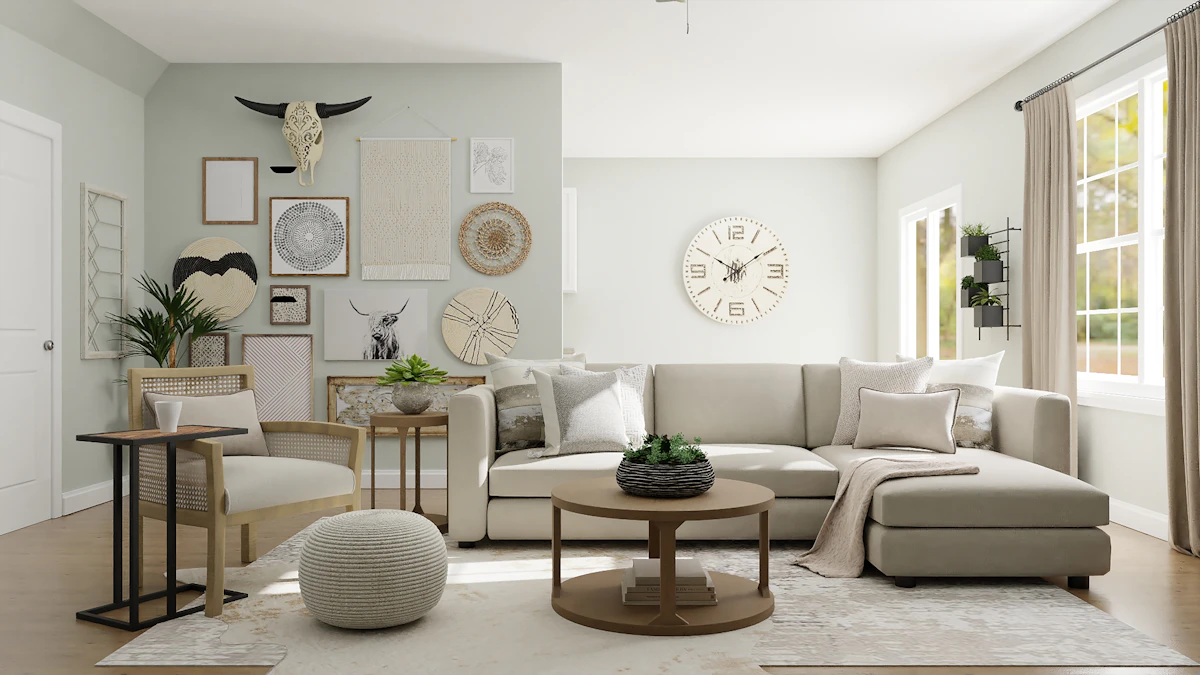
Light, warm neutrals make a small room look biggest, because they reflect more light and help walls feel farther apart. Warm white, soft cream, pale sage, light gray, and gentle blush all work well, and you do not need to paint to use them. Get the same effect from bedding, curtains, a light rug, and pale cushions.
Color sets the mood of a room before you notice anything else in it. You do not need to paint every wall white. Keep the ceiling and trim a shade lighter than the walls, and keep large pieces in related tones rather than mixing many strong colors. Let one or two small accents, such as a terracotta vase or a navy throw, add warmth.
Where Should You Hang a Mirror to Make a Room Look Bigger?
Hang a large mirror on the wall opposite a window, or beside it, so it bounces daylight deeper into the room and makes the wall feel less solid. A mirror leaning against a bedroom wall works well too, near a closet or dressing area. Check that it reflects something pleasant, like a window or a plant, not a cluttered corner.
A mirror is one of the most useful tools for a small room because it reflects both light and the view across the room. A full-length mirror leaning against a wall in a bedroom can also help, especially near a closet or dressing area where you will use it every day. If a large mirror feels too costly, look for a simple arched or rectangular mirror at IKEA, Target, or Amazon, often for $30 to $80. Hang it securely with renter-friendly picture hooks rated for its weight.
What Size Furniture Fits a Small Room Best?
Choose slim, low furniture with visible legs and narrow arms, because you can see the floor beneath it and the room feels less blocked. A loveseat suits a small living room better than a three-seat sofa, and a round dining table fits a tight corner more easily than a square one. Measure first, and leave a clear walking path.
Oversized furniture is the quickest way to make a small room feel crowded. A deep sofa, a wide dresser, or a chunky coffee table can swallow the floor and leave no room to move. Before you buy anything new, measure the room and leave a clear walking path where you move most often. Look for pieces with slim legs, open bases, and narrow arms, because you can see the floor beneath them and the room feels less blocked. Choose furniture that does more than one job, such as a storage ottoman, a bed with drawers underneath, or a bench that holds shoes and blankets.
How Should You Arrange Furniture in a Small Room?
Arrange furniture around the natural path from the door to the window, and keep that path clear. Place the bed or sofa so you face the window or the main light source when you sit down, and avoid putting a tall piece directly in front of the window. Leave breathing room around each piece instead of pushing everything tight together.
How you arrange furniture matters as much as what you buy. Push large pieces against walls only if it helps the flow; in many small rooms, pulling a sofa a few inches away from the wall and leaving space behind it can actually make the room feel less cramped. Try a small change, such as turning a desk to face the room instead of the wall, to open up the whole space.
How High Should You Hang Curtains in a Small Room?
Hang curtains close to the ceiling, about four to six inches above the window frame, and extend the rod several inches beyond each side of the window. That simple placement makes the window look taller and wider, and it lets the curtains fall in a long, clean line to the floor. Choose light curtains that just touch the floor.
Curtains can change the shape of a room when they are hung well. Choose curtains in a light color close to your wall color, and let them just touch the floor rather than pooling on it. Avoid short curtains that stop at the sill in a living room or bedroom, because they can cut the wall in half and make the ceiling feel lower. If you cannot drill into the wall, use a tension rod inside the frame or removable hooks rated for the rod and curtains. Light linen-look curtains are widely available for $25 to $60 a pair, and they soften a room without blocking daylight.
How to Make a Small Room Look Bigger With the Right Rug?
Choose one large, light rug that the front legs of your sofa or bed can sit on. A rug that is too small makes the seating area feel cramped and disconnected, while a light rug in a soft pattern, pale jute, or simple flat weave defines the area without darkening it.
Your floor is the largest surface in the room, so it has a big effect on how spacious the room feels. If you have light wood, pale tile, or a neutral carpet, let as much of it show as possible and avoid covering it with a dark, heavy rug that breaks the room into pieces. When you do use a rug, choose one large enough for the front legs of your sofa or bed to sit on it. A light rug in a soft pattern, a pale jute rug, or a simple flat-weave rug can define a seating area without darkening it. If your rental floor is dated or scuffed, a washable rug in a light tone can refresh the whole room for $40 to $120, and you can take it with you when you move.
How Do You Keep a Small Room From Looking Cluttered?
Give everything a home, keep surfaces and the floor clear, and let go of pieces that no longer fit your life. Start with one surface, such as the top of a dresser, and remove everything that does not belong there. Clear surfaces, a clear floor, and a few chosen objects make a room feel larger and calmer.
Even a well-designed room will feel small when every surface is covered. Clutter breaks up the eye, hides the floor, and makes it hard to relax. Give the remaining items a clear home: a basket for blankets, a tray for keys and small items, a hook for a bag, and a drawer for chargers and cables. Use vertical storage, such as a tall slim shelf or hooks on the back of a door, to free up floor space without adding bulky furniture. Keep a small donation bag handy and let go of pieces that no longer fit your life or your space. If clutter is the main problem, our 12 small apartment storage ideas for tiny apartments show where to put everything without adding bulky furniture.
Start with one or two changes from this list, live with them for a week, and then add the next. Small rooms reward simple choices, and the most spacious feeling often comes from light, calm color, furniture that fits, and a clear path through the room.
Keep Reading: How to Make a Small Room Look Bigger Without Painting, Room by Room
These seven ideas work in any small room, but each room has its own tricks. Keep going with the guides below to put the ideas into practice room by room:
- 15 small bedroom ideas for renters on a budget — storage beds, closet systems, and layout fixes for tiny bedrooms.
- 15 small apartment decor ideas for renters on a budget — deposit-safe decor for studios and one-bedroom apartments.
- Small living room makeover on a $200 budget — a full weekend refresh with an itemized $195 budget.
- Best small space furniture for studio apartments under $200 — storage beds, slim dressers, and nightstand alternatives with real sizes.
Frequently Asked Questions
How can I make a small room look bigger without painting?
Focus on light, mirrors, and furniture first — that is how to make a small room look bigger without spending much. Clear the windows, add a large mirror opposite the light, and choose light bedding, curtains, and a pale rug. Swap oversized pieces for slimmer ones with visible legs, and keep surfaces clear. These changes do not need permission from a landlord and can make a room feel brighter and more open in a weekend.
What color makes a small room look biggest?
Light, warm neutrals usually work best, such as warm white, soft cream, pale sage, and light gray. They reflect more light and help walls feel farther apart. Keep the ceiling a shade lighter than the walls, and add warmth with wood, plants, and one or two small accents rather than a dark accent wall that can close the space in.
Can I hang a mirror in a rental without drilling?
Yes, in many cases. Use removable picture-hanging strips or hooks rated for the mirror's weight, and follow the weight limits on the packaging. For heavier mirrors, ask your landlord about approved hooks, or lean a full-length mirror securely against a wall instead. Always check your lease before you hang anything heavy.
What is the fastest way to make a small room look bigger?
Clear the windows and add a large mirror opposite the light — those two steps alone can change a room in an afternoon. Then hang curtains high and wide, swap one oversized piece of furniture for a slimmer one with visible legs, and clear every surface. The whole set of changes takes a weekend and costs little if you already own a mirror and light curtains.
Does a rug make a small room look bigger or smaller?
A rug makes a small room look bigger when it is large and light, because it defines the seating area and lets the eye read the room as one open space. A rug that is too small has the opposite effect — it chops the floor into pieces and makes the seating area feel cramped. Choose one rug big enough for the front legs of your sofa or bed, in a light tone or soft pattern.